
Hello
I’m Councilmember Mark Humbert
It has been a privilege and a pleasure to serve you and all of my neighbors in District 8 these past four years, and I hope to serve District 8 and Berkeley for another four years. Together, we’ve accomplished a lot:
 Fighting to protect local shops and successfully persuading the Planning Commission to limit Elmwood rezoning to just three sites
Enhancing District 8 parks and replacing the Willard Clubhouse with a new, award-winning facility
Passing Measure FF to fund smoother, safer streets
Supporting our first responders with superb chiefs, new tech, and wildfire preparedness
Adopting Middle Housing zoning to enable the creation of smaller, more affordable homes
Supporting the Elmwood Music Festival, Russell Street Halloween, Berkeley Sun Day, and other community events and organizations
And more!
I would be honored to earn your vote again.
Contribution rules:
- I am making this contribution with my own personal credit card and not with a corporate or business credit card or a card issued to another person.
- I am a U.S. citizen or lawfully admitted permanent resident (i.e., green card holder).
- I am at least eighteen years old.
- This contribution is made from my own funds, and funds are not being provided to me by another person or entity for the purpose of making this contribution.
Berkeley residents: please complete and sign the donation matching form and email to mark@humbertforcouncil.com!
About Mark
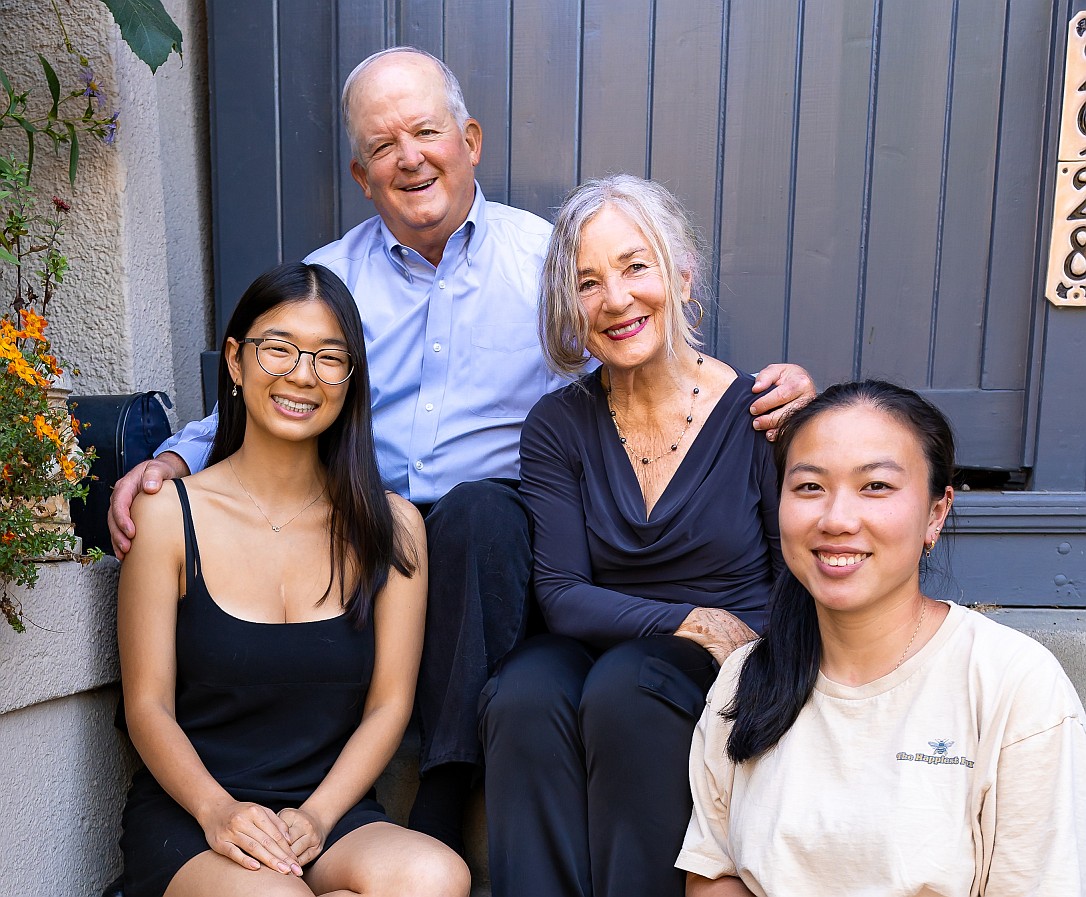
Mark with his family
I have lived in Berkeley for over 25 years and I feel privileged to have served our City as the District 8 Councilmember for nearly four years now. Berkeley has been a wonderful place to live and raise my family, and I want to continue to give back to our community so that others and their kids can enjoy the same opportunities I did.
As your Councilmember, I have prioritized support for our basic City services and infrastructure, as well as planning for our future. If I have the honor of being reelected for another four years, I intend to maintain this pragmatic and focused approach.
I believe that serving our City and our values demands that we prioritize basic services and infrastructure, especially in lean budget times. I believe in giving Berkeley’s excellent City workers the support (and breathing room) they need to focus on keeping residents safe and healthy, and our roads and civic facilities in the best shape possible.
If elected for another four years, I will stay squarely focused on making sure the things we value most come first, and that City resources are allocated efficiently and consistent with our values.
Endorsements (so far!)
All titles are for informational purposes only.
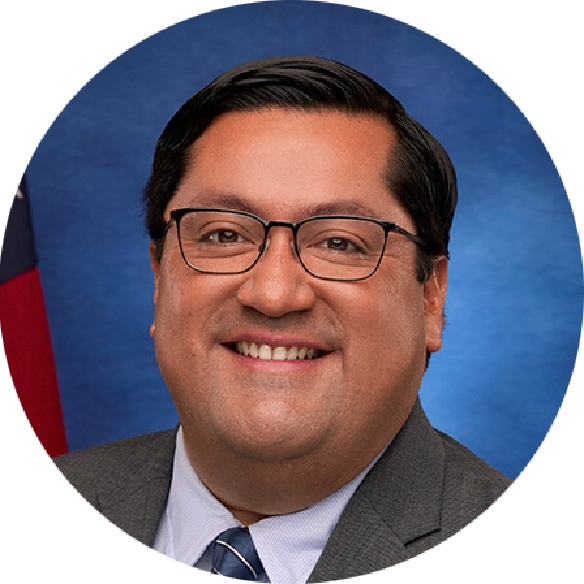
Sen. Jesse Arreguín
California State Senator
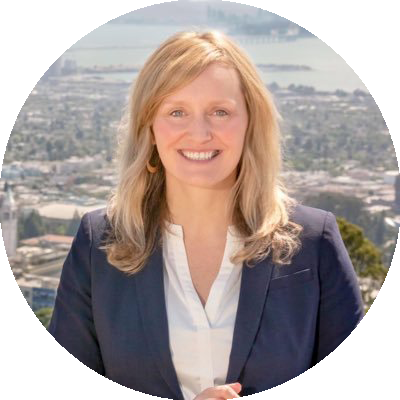
Asm. Buffy Wicks
CA Assemblymember
Buffy Wicks
Adena Ishii
Berkeley Mayor
Terry Taplin
City Councilmember
District 2
Rashi Kesarwani
City Councilmember
District 1
Ben Bartlett
City Councilmember
District 3
Brent Blackaby
City Councilmember
District 6
Shoshana O’Keefe
City Councilmember
District 5
Igor Tregub
City Councilmember
District 4
Barnali Ghosh
BART Board Director
Jean Walsh
AC Transit Director
Dyana Delfín Polk
Peralta Community Colleges Trustee
Tom Bates
CA Assemblymember (Ret.)
Berkeley Mayor (Ret.)
Nancy Skinner
CA State Senator (Ret.)
Gordon Wozniak
D8 Councilmember (Ret.)
Susan Wengraf
Berkeley City Councilmember (Ret.)

Jennifer Shanoski
BUSD School Board, Director
Elizabeth Echols
East Bay Regional Parks Board, Director
Rigel Robinson
Former Berkeley City Councilmember
Nick Pilch
Albany Mayor (Ret.)
John Bauters
Emeryville Mayor (Fmr.)
Deborah Matthews
Past President
Berkeley Democratic Club
Laurie Capitelli
District 5 Councilmember (Ret.)
Vice President, Elmwood Theater Foundation
Karen Parolek
Walk Bike Berkeley
Coordinating Committee
Michael Alvarez-Cohen
Director, Innovation Ecosystem Development, UC Berkeley
District 8 Resident
Alameda County
Democratic Party

The Sierra Club
Berkeley Firefighters’ Association

Berkeley Democratic Club

East Bay Stonewall Democratic Club

Alameda County Jewish Democratic Club

Asian Pacific American Democratic Caucus of Alameda Co.
Berkeley Police Association
Cal Berkeley
Democrats

East Bay Young Democrats
California College Democrats
East Bay Animal PAC

Berkeley Neighbors for Housing & Climate Action
East Bay For Everyone
Allan Abshez
Parks, Recreation, and Waterfront Commissioner
D8 Resident
Debbie Sanderson
Planning Commissioner
D8 Resident
Kera Bartlett Binns
Environment and Climate Commissioner
D8 Resident
Phyllis Orrick
Commission on Aging member
Theo Gordon
Disaster and Fire Safety Commissioner
D8 Resident
Sarah Bell
Housing Advisory Commission, Chair
Fred Collignon
Former D8 Councilmember,
UC Berkeley Professor Emeritus,
D8 Resident
Joan Collignon
D8 Resident
Michael O’Hare
D8 Resident
Marc Hedlund
D8 Resident
Henry Siegel
D8 Resident
Kyra Subbotin
D8 Resident
Molly Turner
Urban Policy Faculty, UC Berkeley
D8 Resident
Mike Wilson
Disaster and Fire Safety Commissioner
D8 Resident
Miriam Rokeach Topel
Former BUSD Boardmember
D8 Resident
Guy Micco
D8 Resident
Wende Micco
D8 Resident
Micki & Bill Turner
D8 Residents
Jim Rosenau
D8 Resident
Nancy Saldich
D8 Resident
Alan Saldich
D8 Resident
Carrie Gray
D8 Resident
Adele Crady
D8 Resident
David Crady
D8 Resident
Andrew Kahn
D8 Resident
Stephanie McKown
District 8 Resident
Non-profit finance professional
Ceil Scandone
District 8 Resident
Liza Lutzker
Transportation and Infrastructure Commissioner
Weldon Bradstreet
Disaster and Fire Safety Commissioner
Jacob Dadmun
Disaster and Fire Safety Commissioner
Karin Evans
D8 Resident
Ginger Ogle
D8 Resident
Professor Judith C. Brown
D8 Resident
Ben Gerhardstein
Walk Bike Berkeley
Harvey Gould
Reichi Lee
Libby Lee Egan
Sofia Zander
Accomplishments in Office
A record of getting things done for District 8 — from safer streets and restored bus service to smart housing policy that protects the neighborhoods we love. Select any item to read the details.
At a City Council work-session in November 2025, Councilmember Humbert was the first and only Councilmember to speak up in favor of focusing new housing on just three sites in order to protect local shops.
Over the next six months, Mark worked with three fellow Councilmembers to promote his tailored zoning approach and get the Planning Commission on board. In May 2026, the Planning Commission voted in support of his approach, focusing zoning for new homes on limited parcels, not just in the Elmwood, but on other commercial corridors as well. Learn more about Mark's approach to new homes in Elmwood here. And for even more in-depth information, check out his Housing FAQ
Initiated by former Councilmember Lori Droste, Mark brought the Willard Clubhouse and Park improvements over the finish line, navigating tense, last-minute zoning considerations to deliver the final Council vote in support of the project. The old Willard clubhouse was inadequately sized and lacked essential facilities for afterschool care and neighborhood events.
Thanks to Mark and Lori's efforts, it has now been rebuilt as an award-winning, highly sustainable community space. Mark fought to ensure the project was not delayed or watered down, so it could serve as many of our kids and neighbors as possible.
Claremont Avenue has long been a dangerous roadway, frequently used by people speeding through between freeways. In response to the most recent tragic loss of life along this roadway, Mark engaged with the community and City staff to develop and kick off a plan for “quick build” safety improvements.
These low-cost strategies represent low-hanging fruit for improving roadway safety by encouraging drivers to slow down and be more aware of their surroundings. These quick-build solutions are currently under construction and serve as a precursor to more extensive long-term improvements anticipated along Claremont Avenue following Alameda County flood control projects beginning later this year or next.
During the pandemic, AC Transit eliminated bus service along Ashby Avenue. Mark was instrumental in persuading AC Transit to bring back an Ashby bus line as the agency considered which services to restore after lockdown. AC Transit was prepared to leave Ashby Avenue without service and instead bring back bus lines elsewhere.
By carefully analyzing AC Transit ridership data, Mark was able to show that the Ashby segment of the prior Line 7 was the more logical and cost-effective choice for restoration. The AC Transit board agreed, and Ashby once again has bus service in the form of Line 27.
Also first initiated by former Councilmember Droste, Berkeley's Middle Housing efforts aim to promote the creation of new homes in modestly sized projects in Berkeley neighborhoods that previously had exclusionary zoning. This effort culminated in final Planning Commission and Council votes during Mark's time in office.
Faced with competing proposals — one of which would have created fewer homes than we need, and one which would have effectively eliminated certain density limits entirely — Mark helped find the middle path for Middle Housing. He helped broker the deal from the dais that led to a consensus proposal winning broad approval from the Council.
Due to changes in State law, police reporting procedures previously adopted by the City Council were creating duplicative and conflicting requirements. Mark introduced the Council item that streamlined and consolidated these reporting requirements, so the Council and public would still get the information they need — but in a single report that comports with State law.
As a member of the UC/City/Student relations committee, Councilmember Humbert fought for UC Berkeley settlement funds to be set aside for the design and construction of safety improvements at Zachary's Corner. Seventeen years ago, this dangerous intersection at Warring and Derby was the site of the tragic loss of five-year-old Zachary Cruz to traffic violence.
Intersection changes to slow down vehicles and improve sight lines have been a long time coming, and Mark insisted that UC settlement funds be prioritized for this project. As a result, community meetings have taken place and a new design has been selected, with construction anticipated to take place soon.
Mark deeply values the community events that bring our neighborhood together. That is why he has reliably provided funding to key community events including Russell Street Halloween, the Music in the Elmwood festival, and the nascent Berkeley Sun Day festival.
Mark has given $1,000 annually from his Council office budget to Russell Street Halloween. And when City bodies declined the Elmwood business association's request for an arts grant, Mark stepped in to provide $7,000 in rescue funds for the Music in the Elmwood festival. Mark is deeply committed to running a lean Council office that leaves room for critical funding for community events.
After a routine hot tub installation resulted in a lengthy neighbor battle and Council hearing, Mark took action to ensure that such disputes do not routinely bubble up to the City Council. Mark introduced an item to have City planning staff develop revisions to Berkeley's Zoning Ordinance that would standardize and streamline the rules and processes for obtaining permits for new hot tubs. This seemingly small change reduces staff time and costs, and aligns Berkeley with how other cities adjudicate Jacuzzis.
Across multiple efforts to increase regulatory burdens, Mark has fought for basic fairness and flexibility for mom-and-pop landlords who own duplexes or ADUs and live on site with their tenants. Although Mark is broadly supportive of basic tenant protections — especially for those in large and corporate-owned apartment buildings — he recognizes and fights for the idea that the relationship is fundamentally different when you are sharing your home or property with your tenant.
Mark has repeatedly resisted efforts to place onerous requirements on small landlords that could force them to live long-term with problematic tenants. And Mark was the sole vote on the City Council against rules (now overturned by the courts) that would have made it hard for small landlords to determine fair market rents for their units.
Automated cameras for speed enforcement are a no-brainer for improving safety on Berkeley streets. Unfortunately, the California State legislature has continued to limit their use and failed to expand pilot programs to include Berkeley (or simply all cities across California). When the speed enforcement camera pilot program came before the State legislature, Mark introduced an urgency item to have the City Council urge state legislators to include Berkeley in the pilot. Although the state still has not done so, this continues to be an area of advocacy for Mark.
Following a series of serious accidents at Berkeley intersections that featured only two-way stops, Mark introduced an item referring to staff a study of improvements at key intersections to slow traffic, increase safety, and pursue newer, more flexible standards for the installation of four-way stop signs.
Under State law, property owners are responsible for repairing sidewalks next to their property; however, the City of Berkeley's 50/50 program splits these costs with property owners to incentivize sidewalk repairs. Unfortunately, this program has been underfunded for years, resulting in long backlogs and poor sidewalk conditions.
Early in his tenure, Mark put forward a budget referral to fully fund this program and speed up repairs. Although the full Council did not ultimately prioritize this expenditure, Mark's goal of fully funding this program has found its way into recent ballot and bond measures.
Forums
League of Women Voters
Elmwood Zoning
Here’s the short version:
- California law requires Berkeley to zone for at least 9,000 new homes from 2023–2031
- California fair housing laws also require Berkeley to allow for new homes along commercial corridors in high-resource areas, like College Avenue
- The initial proposal would have rezoned all College Avenue shops
- I personally met multiple times with neighbors and leadership of Save Berkeley Shops, and I took their well-founded concerns to heart
- In November 2025 I put forward the “tailored zoning” approach that protects our local shops, and focuses the rezoning on just three high-opportunity sites: the 7-11, the Wells Fargo parking lot, and the Post Office parcel. This rezoning would allow, but not require, the owners of those sites to propose new homes.
- From November 2025 to May 2026 I worked hard to build support on the Planning Commission and among as many councilmembers as I could legally work with
- In May 2026 the Planning Commission voted to recommend my tailored zoning approach, not just for Elmwood, but also North Shattuck and Solano. It will now go before the full City Council so the rest of my colleagues can discuss and, I hope, approve this targeted zoning change that meets our obligations under State law.
Here’s the long version (see the dedicated page for even more depth):
California State law requires Berkeley to make good on the policies in its Housing Element and to affirmatively further fair housing. This means allowing for new homes along commercial corridors in high-resource areas of Berkeley in a way that is equitable with what has been allowed in other areas of town. If we fail to do so, it is possible Berkeley could not only lose funding for affordable and supportive housing, but also lose control of our local zoning through the “builder’s remedy.” If that happened, there would be little limit to the height of what could be proposed and the protections I’ve been fighting for would be in jeopardy.
My Solution
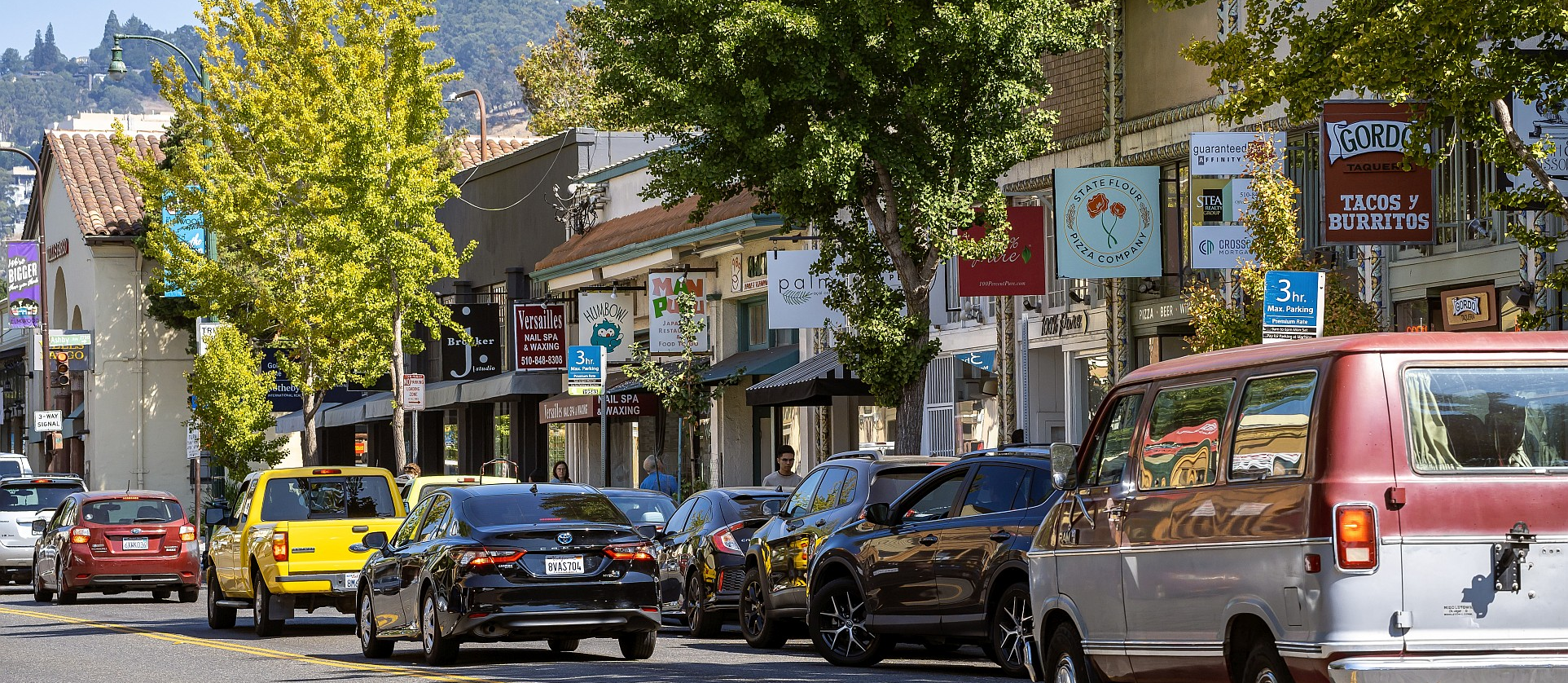
Happily, I believe we can actually achieve a win-win in Elmwood: Allowing for more homes on targeted, underutilized parcels while preserving the unbroken, pedestrian-oriented retail fabric that makes it unique. That’s why I’m continuing to push hard for my “Tailored Zoning” approach that would focus rezoning on the 7-11, the parking lot behind Wells Fargo, and the Post Office site (if USPS leaves).
We are in a fortunate position: these sites are currently dominated by parking lots and are not significantly contributing to the walkable feel of Elmwood. They also happen to be the three sites that City staff and consultants identified as being the three most feasible for new housing. We can therefore rezone just these three sites, achieve almost the same capacity for new homes that was originally projected for a broader rezone, protect existing retail, and enhance the neighborhood and add more foot traffic for our local shops.
I have championed this Tailored Zoning approach for nearly a year, and I’m very pleased that the Planning Commission has voted decisively in favor of it—though there is one site they changed that I intend to push to fix when it comes to Council. Right now we are waiting for final work on the new zoning to complete and for it to come back before Council, possibly in the late fall. I will work hard to land the Tailored Zoning approach, and I think I’m uniquely positioned to try to get a majority of my Council colleagues on board.
Correcting Misinformation
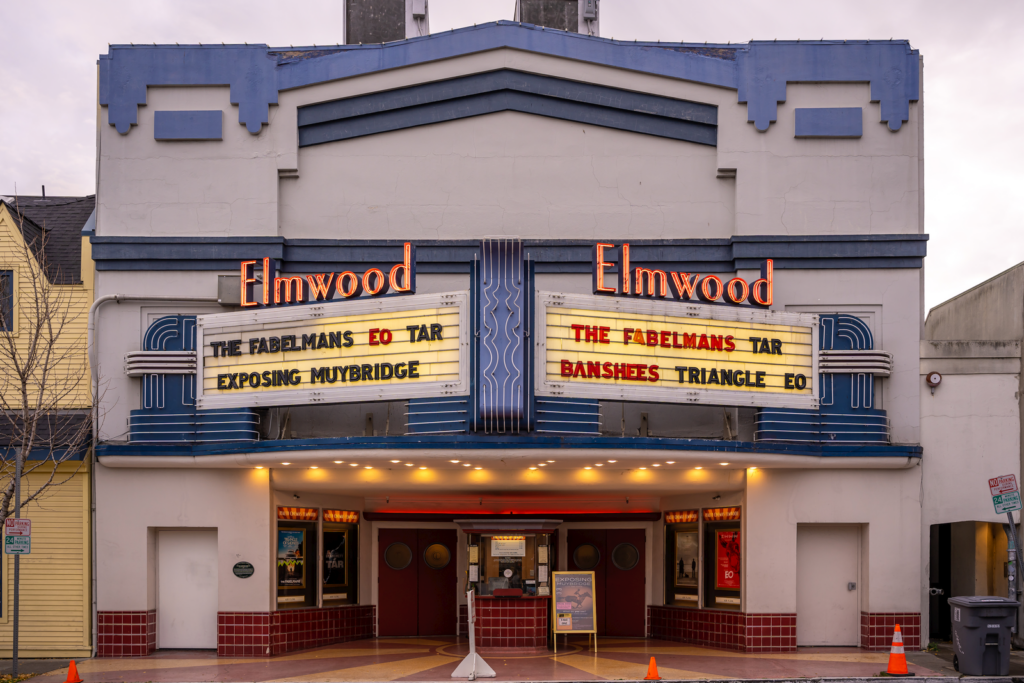 I must, unfortunately, also address misinformation that I’ve heard circulating in the neighborhood: Neither the City nor I are seeking to “bulldoze” Elmwood shops; and the Elmwood theater is already a protected landmark that I have fought and will continue to fight to protect. I have been a booster for the Elmwood theater, and when the Elmwood Theater’s big premiere of Oppenheimer was threatened by damage from a car accident, I personally worked with City staff to ensure the theater could reopen on time. Keeping in place the existing landmark that already protects the theater is non-negotiable.
If you would like to read in a lot more detail about the Corridors Zoning Update and housing in general, please check out my CZU FAQ and my dedicated Elmwood Zoning page.
ALPRs/Flock
Here’s the short version:
I support giving BPD the right tools for the job, while also applying rules and oversight to safeguard civil liberties and make sure our data are protected and used appropriately. I will continue to insist that any vendor the City uses be held to a very high and strict standard.
Here’s the long version:
I want to be candid about this because I feel that Berkeley faces a difficult balancing act and there are multiple things I believe are true:
- Done right, automated license plate readers (ALPRs) are an effective tool to solve and prevent crimes and which help our police department cope with having fewer officers;
- I do not trust Flock because they’ve had multiple instances of carelessness (at best) with other cities’ data;
- Other providers are even less transparent about their practices and are perhaps even more entangled with the Trump administration than Flock; and
- If Berkeley continues using ALPRs, we need an airtight contract with strong data protections, and which we can instantly exit at will and without penalty, regardless of who operates them.
Berkeley and California already have strong prohibitions against sharing ALPR data with federal agencies. This is the legal bare minimum and absolutely non-negotiable. The City is currently engaging in an RFP process to seek alternatives to Flock’s ALPRs.
For me, additional red-line requirements for any future ALPR contract are: strict City control of who can access Berkeley’s data; thorough and regular auditing of who has access and who is searching for what; and, most importantly, contract escape clauses that let the City cancel the contract at any time, for any reason, and with no financial penalty for the City.
Having seen first hand how quick and effective these devices are at catching stolen and crime-associated vehicles coming into Berkeley, I’m convinced that they offer significant public safety benefits. And with strict data controls and contract provisions, I believe Berkeley can make use of ALPRs while respecting civil liberties and protecting the public from abuse of these systems. And if we have any reason whatsoever to suspect abuse, we can pull the plug.
Willard Pool
Like many of you, I deeply miss Willard Pool and wish we could bring it back. South Berkeley has a dearth of public recreation facilities, and the closure of Willard Pool made this scarcity that much worse. Unfortunately, the City Council has few if any tools to resurrect Willard Pool.
Following the defeat of Measure C in 2012, which would have provided bond money to renovate and re-open the pool, the Berkeley Unified School District moved on from the idea of having a pool there. BUSD continues to own the property, and my understanding is that they have not expressed interest in selling it to the City or bringing back a pool at that location.
My sense is that the School District is hoping to someday use all or a portion of the site for a new auditorium at Willard Middle School, which currently only has a less-than-ideal “cafetorium.” Decisions regarding Willard Pool thus rest fundamentally with BUSD, not the City Council. I would welcome a citizen’s initiative provide funding and encourage BUSD to reopen the pool and/or sell the property to the City (this would have the advantage of a lower approval threshold than a Council-initiated measure). But, unfortunately, given BUSD’s current plans and the 2012 defeat of Measure C, the City has not been able to prioritize this versus other easier infrastructure wins.